University Level
Foundation Degree in Animal Management (Behaviour and Welfare)
The Foundation Degree Animal Management (Behaviour and Welfare) is designed to enable career ready, confident, inquisitive, critical thinking and empowered professionals and focuses on foundational skills at Levels 4 and 5, emphasizing the importance of understanding the behaviour of a variety of animal species to better support positive health and welfare.
Through interactive tuition from a range of experienced academic staff, professionals and guest lecturers, theoretical modules are aimed at enabling students to recognise and understand the underpinning knowledge required and apply that theory to the care provided for a variety of animal species.
Developing the practical skills, demonstrating appropriate transferable skills, self-awareness and the capacity to engage in reflective practice is made attainable through the tuition provided by experienced teaching staff who have all worked in the animal industry.
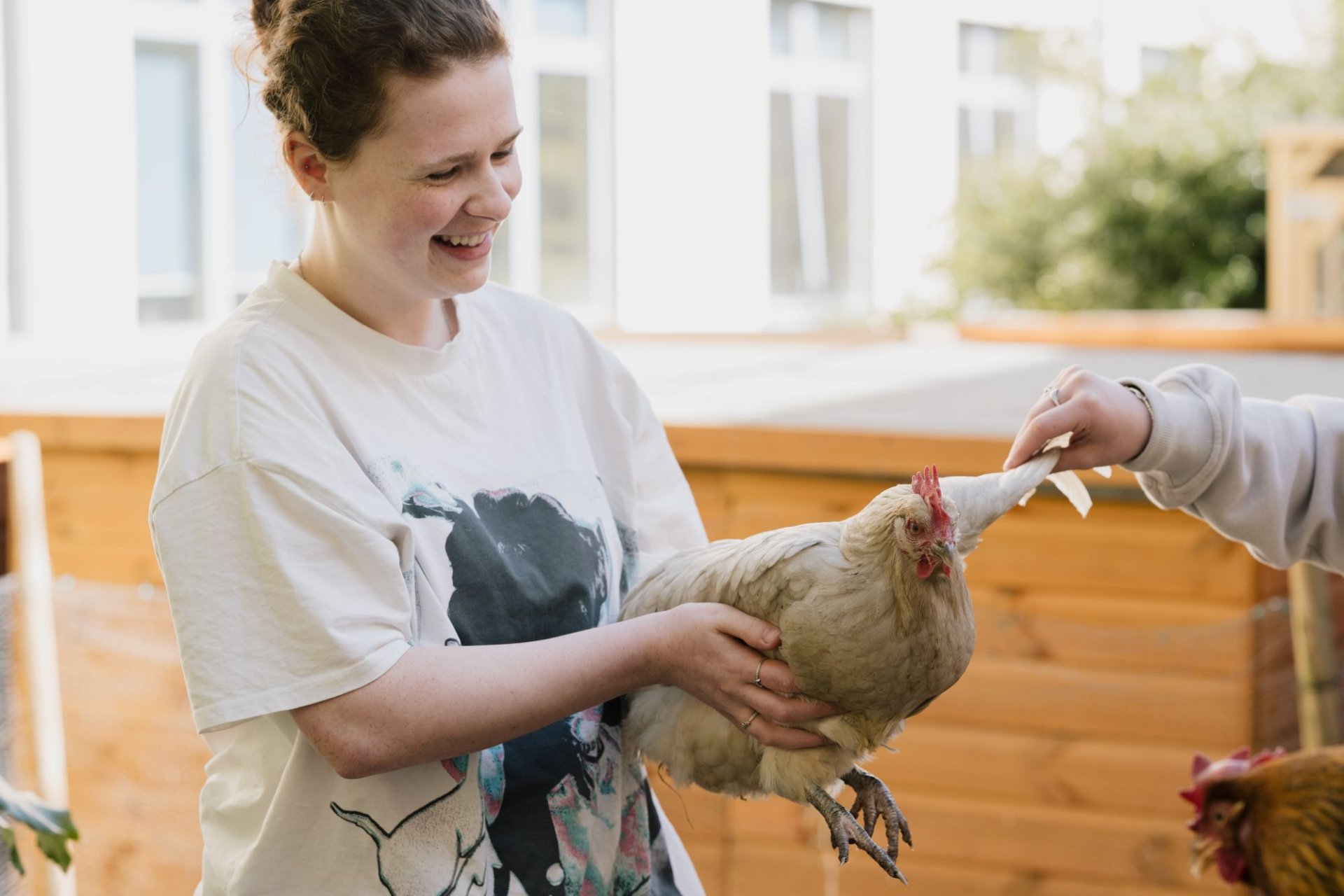
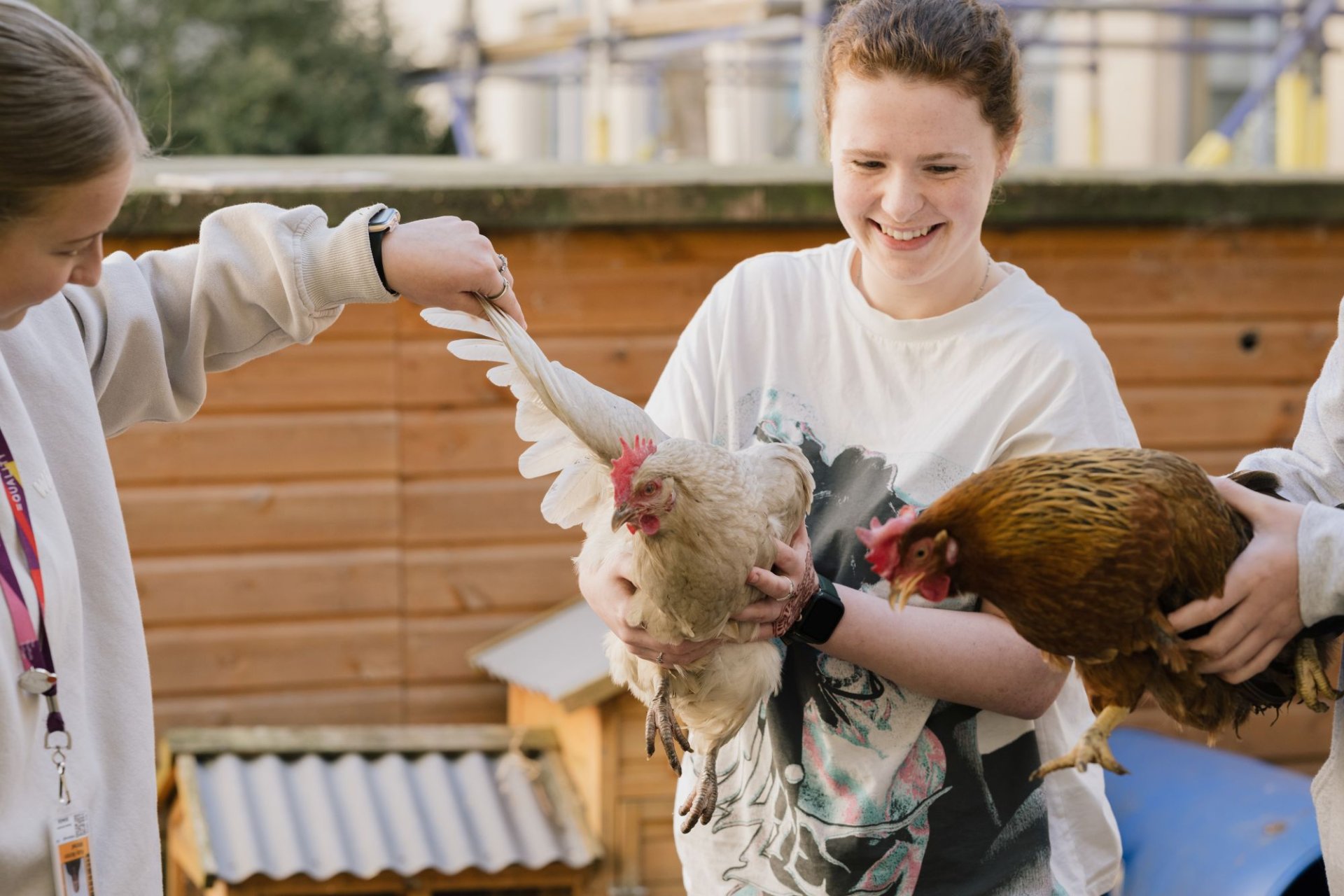
The course has been developed to allow students to explore the needs of a variety of animal species both in theory and through extensive practical opportunities both on site and in industry placements. This approach ensures that graduates will be employment ready with the necessary skills needed in this exciting and ever growing industry.
About the course
Year 1
Animal Health & Welfare – Recognise signs of health and disease in different animal species and learn how to promote good health and prevent illness.
Animal Behaviour – Conduct behaviour observations, interpret findings and recommend ways to manage or modify behaviours.
Animal Husbandry – Explore good husbandry practices, animal handling, accommodation, feeding, health and safety, and relevant legislation.
Animal Anatomy & Physiology – Develop an understanding of animal biological systems and how they function.
Animal Nutrition – Understand macro and micronutrients, their role in balanced diets and their influence on metabolism.
Exotic Animal Husbandry – Explore the natural diets of exotic animals and how to meet their nutritional and behavioural needs in captivity.
Year 2
Work Experience – Develop personal and professional skills through practical activities in a relevant workplace.
Anthrozoology – Explore human-animal relationships and how animals are used, valued and sometimes exploited in society.
Evolution & Adaptations – Investigate the diversity of animals' physiological systems and how they have evolved.
Behavioural Approaches to Animal Management – Explore the links between animal behaviour and biology, and how scientific research informs the management of wild and captive animals.
Humanisation of Companion Animals – Examine how and why humans attribute human characteristics to animals, including the history of human-animal relationships.
Research Project – Undertake an independent research project in a chosen area of study.
64 UCAS points gained either through AS/A Level or level 3 qualification in an animal or science related subject
English and Maths GCSE at Grade C or above, or the equivalent, e.g. Functional Skills at Level 2
If first language is not English and GCSE grade C / 4 English or equivalent is not held, English language proficiency level such as International English Language Testing System (IELTS) 6.0 overall (with a minimum 5.5 in each skill) will need evidencing
Applicants should have a genuine interest and passion for the subject and be able to demonstrate this articulately along with motivation and confidence
In line with The Sheffield College’s commitment to widening participation, we encourage applicants from a diverse range of backgrounds. If students are mature learners, they may present a more varied profile of achievement that is likely to include extensive work experience and/or a range of professional qualifications in their work sector. References, alternative experience and skills will all be considered.
Essays
Reports
Log books
Practical portfolios
Journal articles
Research reports and projects
Students who successfully complete the foundation degree can progress to the top-up year to achieve a full Bachelors degree.
A degree level qualification in animal management could open career opportunities in careers such as:
Animal conservation
Animal keeper/Zoo keeper
Animal rescue
Animal welfare
Animal trainer/behaviourist
Animal rehabilitation
Students will also participate in practical days throughout the year at Valley Wildlife Zoo.
Students will also be required to complete 100 hours of industry placement in an industry setting that aligns with their future career goals.
Personal Protective Equipment (PPE) for practical sessions - long sleeved clothing and work shoes / boots - approx £50
Student case study
“Studying Animal Management at UC Sheffield significantly broadened my understanding of animal health, welfare, and behaviour. The course tutors each are impeccable within their roles, working alongside staff who have previous veterinary nursing careers is amazing to receive real life perspective. The animal collection at Hillsborough Campus broadens student ability in handling and caring for a diverse range of species. Furthermore, the opportunity to participate in the touring scheme trip to St. Lucia provided invaluable real-world experience and expanded my global perspective on animal conservation. This course has provided valuable work experience, knowledge and once in a lifetime opportunities. I would highly recommend this course for anybody passionate in animal welfare and aiming to pursue a career within the animal industry. ”
Porcia - Foundation Degree in Animal Management

7,198
Employed in 2026 across Sheffield
6,949
Graduate jobs predicted in Sheffield, during 2027
£32,272
Average salary
Similar Courses
Click here to apply through UCAS
Key Information
Course Code
P00784
Subject Area
Animal Management
Campus
Hillsborough Campus